
The lubricant that keeps your shaft on a film of gel- not on the bearing surface.
32,000 cSt. 84.61% biodegradable. The synthetic gel that keeps the rotating shaft fully off the journal bearing – and keeps it there for the full crushing season.
Scroll
- ISO 9001:2000
- OECD 301/B Biodegradability Certified
- STAI 2014 Peer-Reviewed Paper
- NSF H1 Compatible
- 80+ Indian Sugar Mills
- LAAPSA Argentina · Since 1988
Eighteen seasons. Eighty mills.
One product family.
The IIT Delhi case study (Premature bearing failure in sugar mills is a lubrication problem - not a bearing problem.)
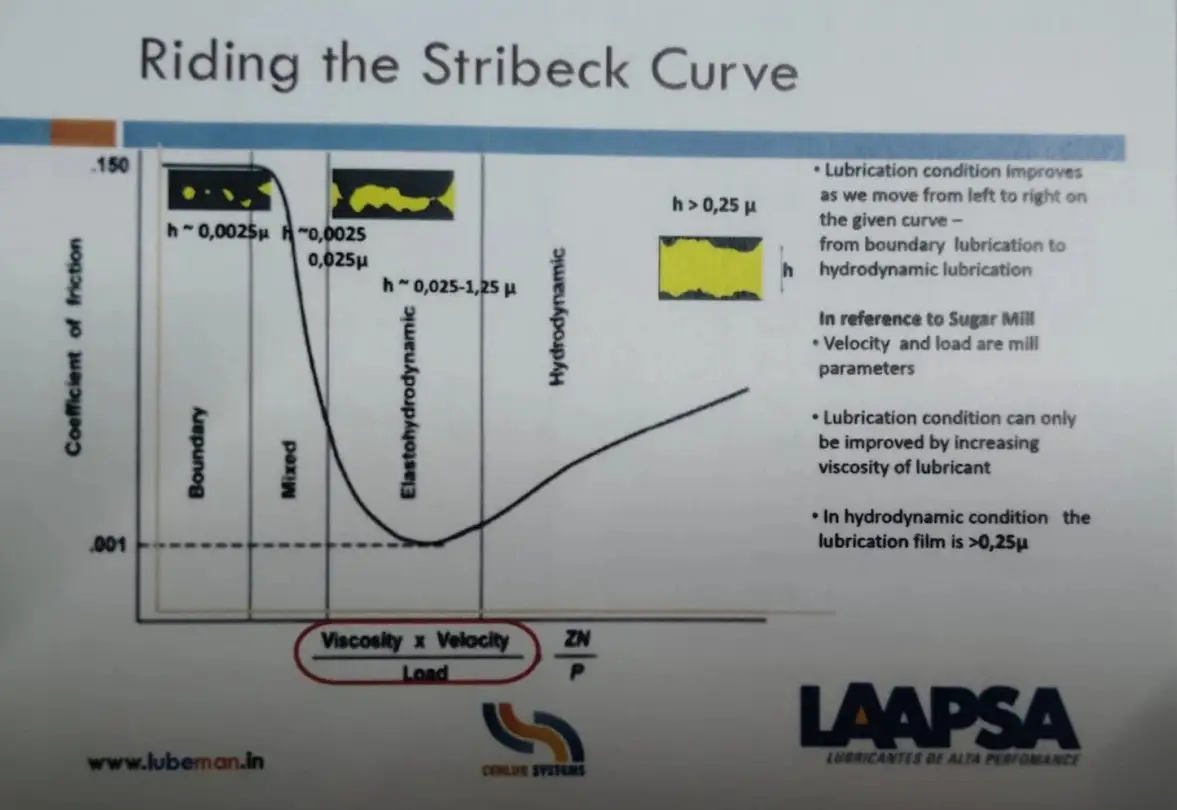
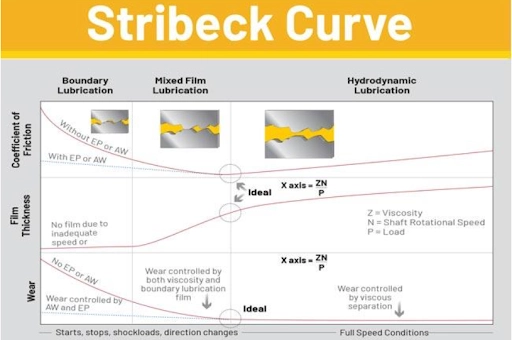
A 2011 IIT Delhi study published in Engineering Failure Analysis demonstrated experimentally that sugar mill journal bearings operate in boundary lubrication conditions – not hydrodynamic. That single fact explains why bearings on standard grease wear out faster than the manufacturer’s design life predicts.
LAAPSA was built specifically to shift the regime from boundary to hydrodynamic. Multi-season bearing life, not single-season.
The implication for Indian mills is straightforward: “hydrodynamic performance” should be proven, not promised. Without measurable benchmarks such as a Four-Ball EP weld point above 800 kg and OECD-certified biodegradability, the claim remains marketing-not engineering.
Boundary lubrication and hydrodynamic lubrication are not the same category.
Boundary lubrication manages wear. Hydrodynamic lubrication avoids it. Once that distinction is clear, the decision is no longer about lubricant price-it’s about whether you want to keep paying for the same problem every season.
- Lubricate the contact surface - accept that wear happens
- Buy lubricant based on price per kg
- Mill-house mess is normal · used oil is hazardous waste
- Reapply 7–10× more to compensate for washout
- Eliminate the contact - wear becomes optional
- Buy lubrication cost per day
- Mill-house cleanliness becomes a leadership signal
- Apply once · gel adheres and seals the bearing
Did You know a single stoppage costs ₹12 lakh?
Per-kg is the wrong unit. Per-day is the honest one.
The synthetic gel. The
grease with additives.
The bituminous oil.
Most mills evaluating sugar mill lubricants report the same frustration: “all suppliers claim the same.” We don’t rely on claims-we publish a fully sourced eleven-row comparison.
An order of magnitude thicker.
Higher than the next best hydrodynamic option in the market. 18 times higher viscous than additive grease base oil at 100 degree c.
The only one with a accredited certificate.
The only product in the comparison with an accredited-lab OECD 301/B certificate. Generic biodegradable claims aren’t certified.
The only facility dedicated to cane.
LAAPSA’s R&D facility is dedicated exclusively to sugar mills. Most lubricant suppliers replace their products developed for cement, auto- motive, mining industries.
A 25-micron film of synthetic gel keeps the shaft fully off the bearing.
Even at 5 RPM. Even under multi-ton load. Even when cane juice and bagasse are washing through the mill house. The film stays put — for the full crushing season.

Film strength that holds the load.
An ultra-high-viscosity synthetic gel many times thicker than grease base oil maintains a cohesive film that stays in place and supports multi-ton loads even at slow shaft speeds.
A film that doesn't wash away.
Synthetic gel structure resists washout from cane juice, water and bagasse. The film stays put for a longer time-without repeated reapplication.
Built to fast biodegrade.
OECD 301/B certified — 84.61% in 28 days, accredited lab. Built to biodegrade so any leakage doesn’t strain your ETP, and CPCB audits stay routine.
Stop comparing per kg.
Start comparing per day.
A mill consuming 7× the volume of grease at half the price still costs more. And that’s before bearing rebuilds, mill stoppage at ₹12L+ per 8 hours, and PCB-driven ETP penalties. Run your mill’s numbers below.
Current lubricant cost
LAAPSA cost per crushing-day
Annual savings — before counting prevented breakdowns
The best feedback isn't about the
lubricant.
It's about what changed.

After shifting to LAAPSA, we observed more stable bearing temperatures during peak crushing.
Chief Engineer
5,000 TCD mill · Maharashtra
One major advantage was the biodegradable nature — it reduced our ETP load, which was always a concern with previous lubricants.
GM Technical
Cooperative mill · Tamil Nadu
LAAPSA stayed longer on the surface and required less frequent application. The mill house was also noticeably cleaner.
Maintenance Head
Mill in Uttar Pradesh
During the season, reliability is everything. With LAAPSA, we had more confidence in bearing performance and fewer fluctuations in temperature.
GM Technical
Cooperative mill · Tamil Nadu
272.31 lakh tonnes. ~9%
growth. One regulatory
direction.
India’s 2025–26 crushing season closed at 272 lakh tonnes of sugar — nearly 9% higher than the prior year (ISMA, 31 March 2026). Ex- mill prices remain below cost in Maharashtra and Karnataka. Cane payment arrears are widening. CPCB Charter 2.0 is tightening ETP norms, with NGT-led closure orders already issued in the Ganga basin.
A lubricant decision that was a line-item three years ago is now a compliance and cash flow decision. LAAPSA is built for this regulatory direction — not the one we left behind.
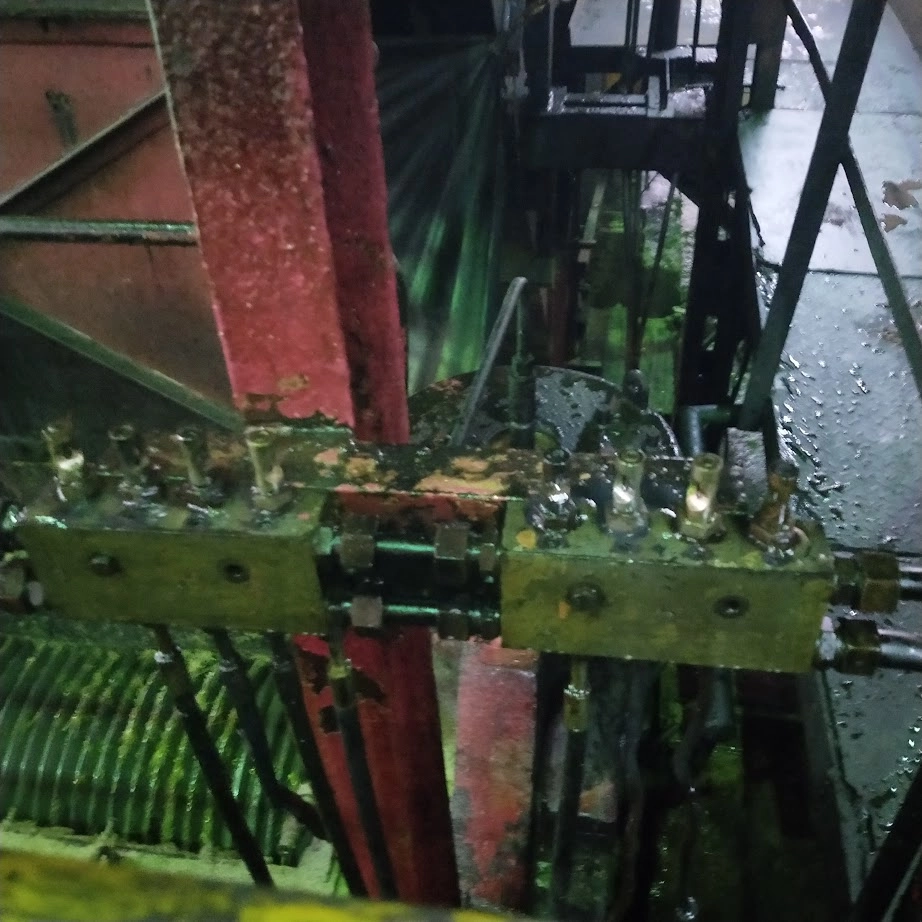
The lubricant is
half
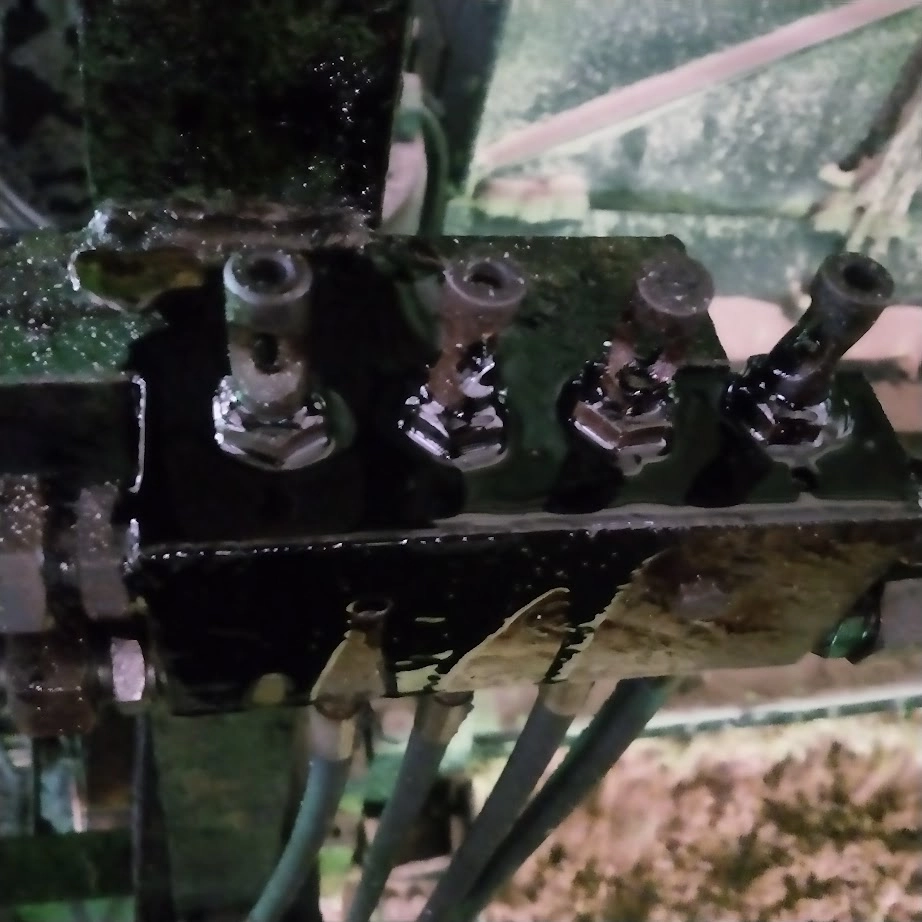
the job. The delivery system is the other half.
What is Centralised Lubrication System
Dose balancing(DBA) and Audit
This is why every LAAPSA engagement begins with a free CLS audit — before a single drum is loaded. We check the system first. If the system isn't right for gel, the lubricant won't perform. And we don't want a number on your board that we can't defend.
The next conversation
starts with your data on the table.
Run a 30-day plant trial.
No extra cost, same-day cost. Trial protocol PDF · DBA software demo · free CLS audit included · documented before/after data · operator training on-site.
Free CLS audit.
11-point Cenlub Systems audit · dose-feeder sizing review · line-pressure check · DBA software walkthrough · no purchase commitment.